

Trifocal vs. EDOF Intraocular Lenses in Turkey: Which Smart Lens Suits Your Eyes?
Patients travelling from the UK and Europe for Lens Replacement Surgery in Turkey or Cataract Surgery in Turkey frequently ask a crucial clinical question: Should I choose a Trifocal Smart Lens or an EDOF (Extended Depth of Focus) lens? While both premium intraocular lens (IOL) platforms eliminate dependence on varifocal glasses, they use fundamentally different optical principles to focus light onto the retina.
Selecting the ideal intraocular lens is never a one-size-fits-all decision. Your corneal topography, pupil diameter in dim light, macular health, daily screen time, and night driving habits all determine which optical profile will give you the sharpest, most comfortable vision for life.
Clinical Summary
Trifocal IOLs split incoming light into three distinct focal points (near, intermediate, and distance) for maximum freedom from reading glasses, whereas EDOF IOLs create a single continuous elongated focal zone that delivers superior night driving contrast with minimal halos.
How Trifocal (Smart) Intraocular Lenses Work
Trifocal intraocular lenses, widely known as Smart Lenses, use precision diffractive rings on the lens surface to distribute light across three distances simultaneously: near reading (35 to 40 cm for books and smartphone text), intermediate distance (60 to 80 cm for laptop screens and car dashboards), and far distance (driving and watching television).
For patients with a completely healthy retina and cornea whose primary goal is 100% independence from both distance and reading spectacles, trifocal implants such as Alcon AcrySof IQ PanOptix, Clareon PanOptix, J&J Tecnis Odyssey, Rayner Galaxy, and Johnson & Johnson Tecnis Odyssey represent the gold standard. Because diffractive rings divide light energy, patients may notice mild concentric rings (halos) around headlights at night during the first 4 to 12 weeks until the brain completes neuroadaptation.
How EDOF (Extended Depth of Focus) Lenses Work
EDOF (Extended Depth of Focus) lenses use non-diffractive wavefront-shaping technology rather than sharp concentric steps. Instead of splitting light into separate points, an EDOF lens stretches the focal point into a smooth, continuous corridor of vision extending from far distance all the way up to arm’s length (approximately 50 to 55 cm).
Premium EDOF platforms such as Alcon AcrySof IQ Vivity, J&J Tecnis PureSee, and Johnson & Johnson Tecnis PureSee preserve nearly 100% of contrast sensitivity in dim lighting and produce a night-time visual profile comparable to a natural young lens. Patients can effortlessly drive at night, work on computers, read restaurant menus, and check their phone without glasses, needing only light (+1.00 D) readers for prolonged reading of tiny medicine-bottle print in dim light.
Who Benefits Most from EDOF Lenses?
Professional drivers, frequent night drivers, photographers, patients who previously had LASIK or PRK laser surgery, and individuals with mild dry eye or early macular changes achieve exceptional visual quality with EDOF lenses.
Side-by-Side Comparison: Trifocal vs. EDOF IOLs
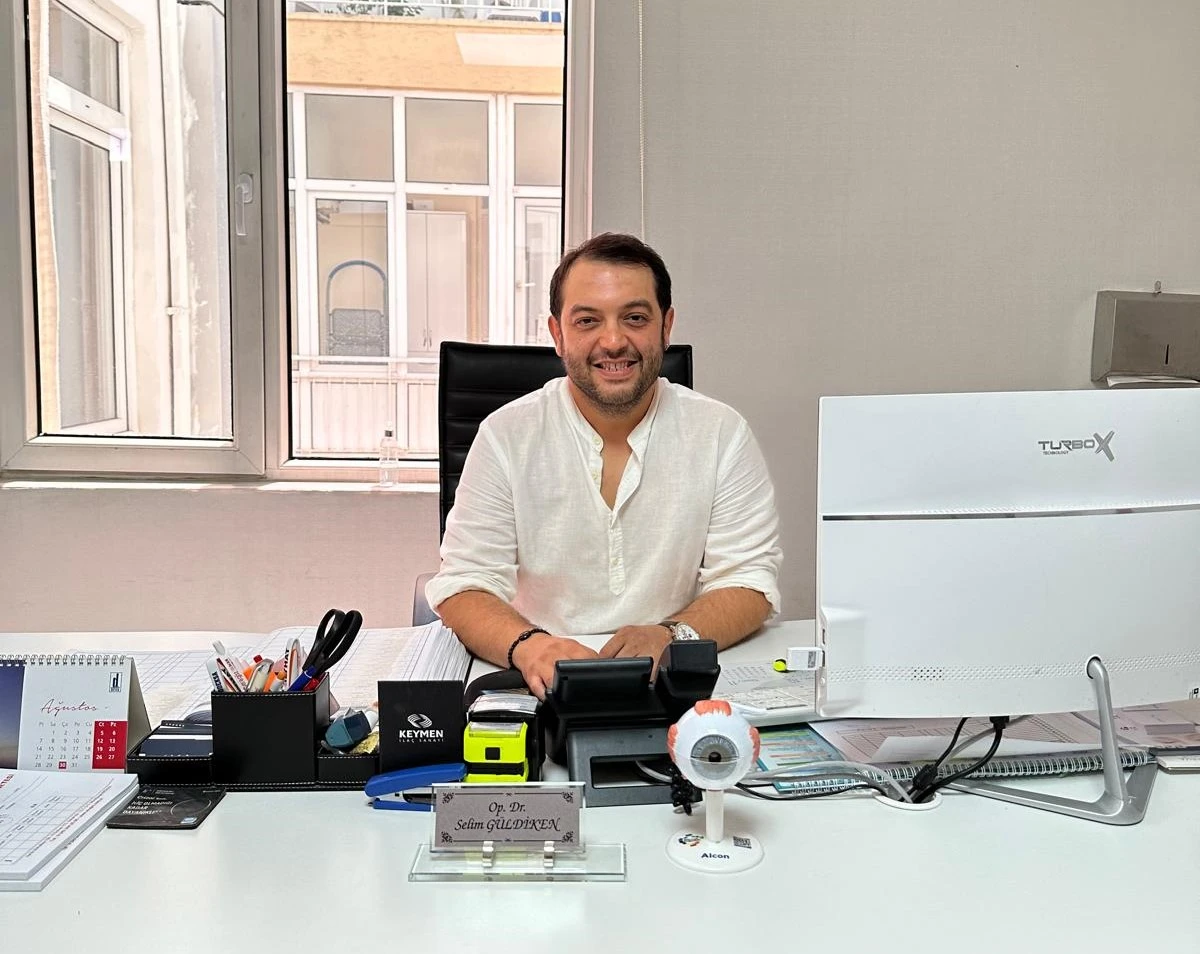
During your pre-operative Ophthalmology Consultation in Turkey, Op. Dr. Selim Güldiken evaluates your optical biometry and corneal wavefront scans against the following clinical benchmarks:
| Optical & Lifestyle Feature | Trifocal Smart Lens (PanOptix / AT LISA) | EDOF Lens (Vivity / PureSee / AT LARA) |
|---|---|---|
| Distance Vision (Driving, Sports, TV) | Excellent | Superior (Maximum contrast in all light) |
| Intermediate Vision (Laptop, Dashboard, 60 cm) | Very Good | Seamless continuous focus corridor |
| Fine Near Reading (Books, Small Print, 35 cm) | Excellent (Complete spectacle independence) | Good (Light readers for tiny print in dim light) |
| Night Driving & Halo/Glare Profile | Mild halos during 1-3 month neuroadaptation | Minimal to none (Monofocal-like night clarity) |
| Suitability After Previous Laser Eye Surgery | Selective cases only | Highly Suitable |
| Toric (Astigmatism-Correcting) Version | Available (Trifocal Toric) | Available (EDOF Toric) |
Pre-Operative Biometric Diagnostics and Toric Astigmatism Correction
Over 35% of patients seeking lens replacement also have corneal astigmatism exceeding 0.75 diopters. Implanting a standard spherical lens in an astigmatic eye leaves residual blur. By choosing a Toric Trifocal or Toric EDOF lens, corneal astigmatism, presbyopia, and myopia or hyperopia are corrected simultaneously inside the eye.
Before selecting your lens model, we perform six painless diagnostic scans including swept-source optical biometry, Scheimpflug corneal topography, macular OCT, specular endothelial microscopy, dynamic pupillometry, and tear-film osmolarity analysis. Every patient receives the official manufacturer IOL authenticity card with serial numbers upon completion of surgery. You can also review our detailed guide on The Cost of Lens Replacement Surgery in Turkey.
5-Night International Patient Schedule in Antalya, Turkey:
- Recommended Stay: 5 Nights in total in Antalya (staying 1 or 2 days longer is even better)
- First Appointment: Pre-Op Tests and Consultation (approx. 1 hour); first eye surgery can be performed on this visit if the lens power is in stock
- Second Appointment: First Eye Surgery (10-15 minutes under numbing eye drops)
- Third Appointment: Second Eye Surgery (performed on a separate day for bilateral sterile safety)
- Fourth Appointment: Final Post-Op Slit-Lamp Check with Op. Dr. Selim Güldiken and Fit-to-Fly certificate
Frequently Asked Questions
document.querySelectorAll(‘.dsg-faq-question’).forEach(function(btn){btn.addEventListener(‘click’,function(){this.classList.toggle(‘active’);var answer=this.nextElementSibling;answer.classList.toggle(‘active’);});});
Medical Review & Clinical Verification | Op. Dr. Selim Güldiken
This medical educational article has been reviewed and approved by Op. Dr. Selim Güldiken, board-certified Ophthalmologist and Eye Surgeon in Turkey (Residency at Akdeniz University Faculty of Medicine; Member of ESCRS, ASCRS, and the Turkish Ophthalmological Association).