

Macular Degeneration (AMD) Diagnosis & Intravitreal Injection Therapy in Turkey
The macula is the highly specialised central 5-millimetre zone of the retina responsible for sharp straight-ahead vision, reading fine print, recognising faces, driving, and distinguishing vivid colour contrast. Age-Related Macular Degeneration (AMD) is the leading cause of central vision impairment in adults over age 55.
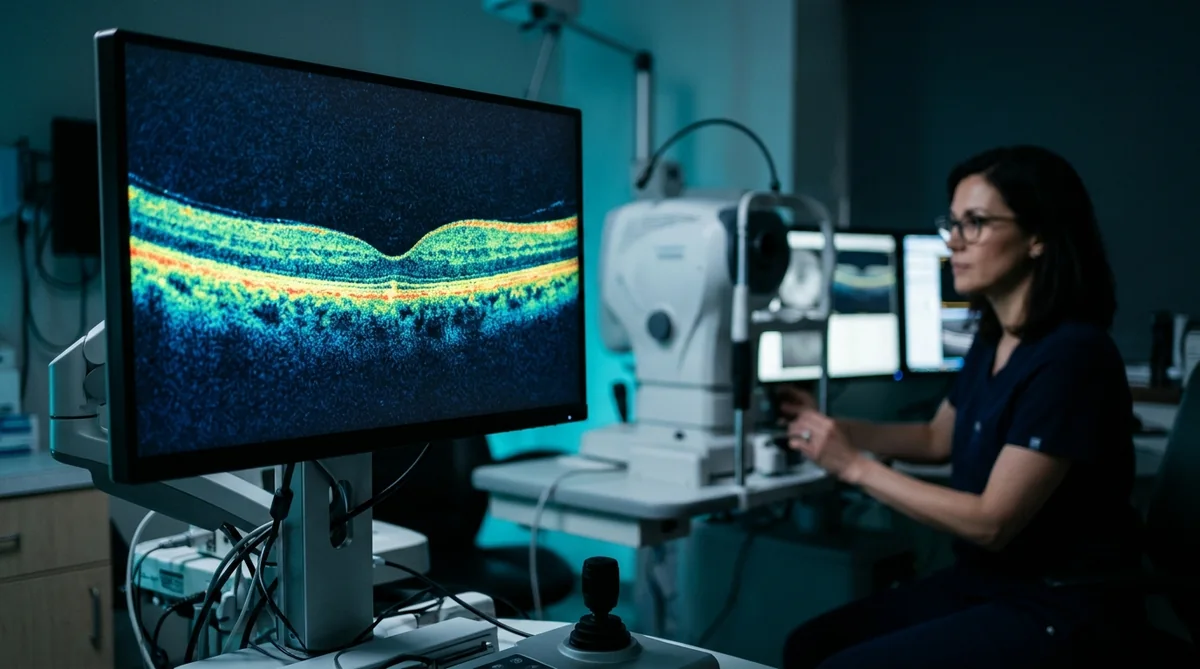
Through comprehensive Macular Degeneration Treatment in Turkey, Op. Dr. Selim Güldiken provides micron-level Optical Coherence Tomography (OCT) diagnostics, evidence-based AREDS2 nutritional management for Dry AMD, and sterile intravitreal Anti-VEGF injection therapy to halt leakage and preserve central sight in Wet AMD.
Clinical Summary
AMD affects central reading and facial recognition while leaving peripheral (side) vision intact. Early detection via spectral-domain OCT and timely intravitreal Anti-VEGF therapy in Wet AMD can stabilise and often improve visual acuity.
Dry AMD vs. Wet (Neovascular) AMD: Key Clinical Differences
Understanding whether macular degeneration is in the Dry (atrophic) form or the Wet (exudative/neovascular) form determines the urgency and type of medical intervention required during your Ophthalmology Consultation in Turkey:
| Clinical Parameter | Dry Macular Degeneration (85-90% of Cases) | Wet Macular Degeneration (10-15% of Cases) |
|---|---|---|
| Pathophysiology | Yellow lipid deposits (drusen) and gradual thinning of retinal pigment cells | Abnormal fragile blood vessels (CNV) leaking fluid and blood under the macula |
| Progression Rate | Slow progression over several years | Rapid onset; can distort central vision within days or weeks |
| Primary Symptom | Need for brighter reading light; mild central haziness | Straight lines appearing wavy/bent (metamorphopsia) and central dark spot |
| Clinical Treatment | AREDS2 Lutein/Zeaxanthin supplementation, UV protection & OCT monitoring | Intravitreal Anti-VEGF injection therapy to seal leaking vessels and dry retinal fluid |
How Intravitreal Anti-VEGF Injection Therapy Works
In Wet AMD, elevated levels of Vascular Endothelial Growth Factor (VEGF) stimulate abnormal blood vessel growth beneath the macula, causing macular edema (swelling) that distorts photoreceptor cells. Intravitreal Anti-VEGF therapy delivers targeted medication directly into the vitreous cavity to block this growth factor, reabsorb subretinal fluid, and flatten the macula.
What to Expect During Your Sterile Procedure:
- Complete Topical Numbing: Potent anaesthetic eye drops numb the ocular surface completely so no pain is felt
- Antiseptic Preparation: The eye and eyelids are prepared under strict sterile protocol to ensure maximum safety
- Micro-Needle Administration: Using an ultra-fine 30-gauge micro-needle through the white part of the eye (pars plana), the injection takes only 3 to 4 seconds
- OCT-Guided Treat-and-Extend Protocol: Following an initial loading series, subsequent intervals are tailored based on high-resolution OCT fluid measurements
Frequently Asked Questions
Medical Review & Clinical Verification | Op. Dr. Selim Güldiken
This medical educational article has been reviewed and approved by Op. Dr. Selim Güldiken, board-certified Ophthalmologist and Eye Surgeon in Turkey (Residency at Akdeniz University Faculty of Medicine; Member of ESCRS, ASCRS, and the Turkish Ophthalmological Association).