
Glaucoma (High Eye Pressure): Silent Symptoms, OCT Nerve Screening & Treatment in Turkey
Often referred to in ophthalmology as the “silent thief of sight,” glaucoma is a progressive optic neuropathy in which elevated or unstable intraocular pressure (IOP) gradually damages the delicate retinal nerve fibers that transmit visual signals from the eye to the brain. Because primary open-angle glaucoma - the most common form - causes zero pain, redness, or central blur in its early stages, over half of affected individuals are unaware they have it until significant peripheral vision has been lost.
While optic nerve fibers already lost to glaucoma cannot be regenerated, early detection through high-resolution diagnostics stops disease progression in its tracks. In this clinical guide, we explain how we diagnose and manage glaucoma during our comprehensive Ophthalmology Consultation in Turkey.
Why Air-Puff Tests Alone Are Not Enough
A simple high-street “air-puff” pressure test cannot rule out glaucoma. Accurate glaucoma screening requires correlating Goldmann applanation tonometry with central corneal thickness (pachymetry) and Spectral-Domain OCT retinal nerve fiber layer (RNFL) imaging.
Our 4-Pillar Glaucoma Diagnostic Protocol in Antalya
| Diagnostic Modality | What It Measures | Why It Is Essential |
|---|---|---|
| Goldmann Applanation Tonometry | True intraocular pressure in mmHg | Clinical gold standard far more accurate than non-contact air puff |
| Corneal Pachymetry | Central corneal thickness in microns | Adjusts pressure readings for naturally thin or thick corneas |
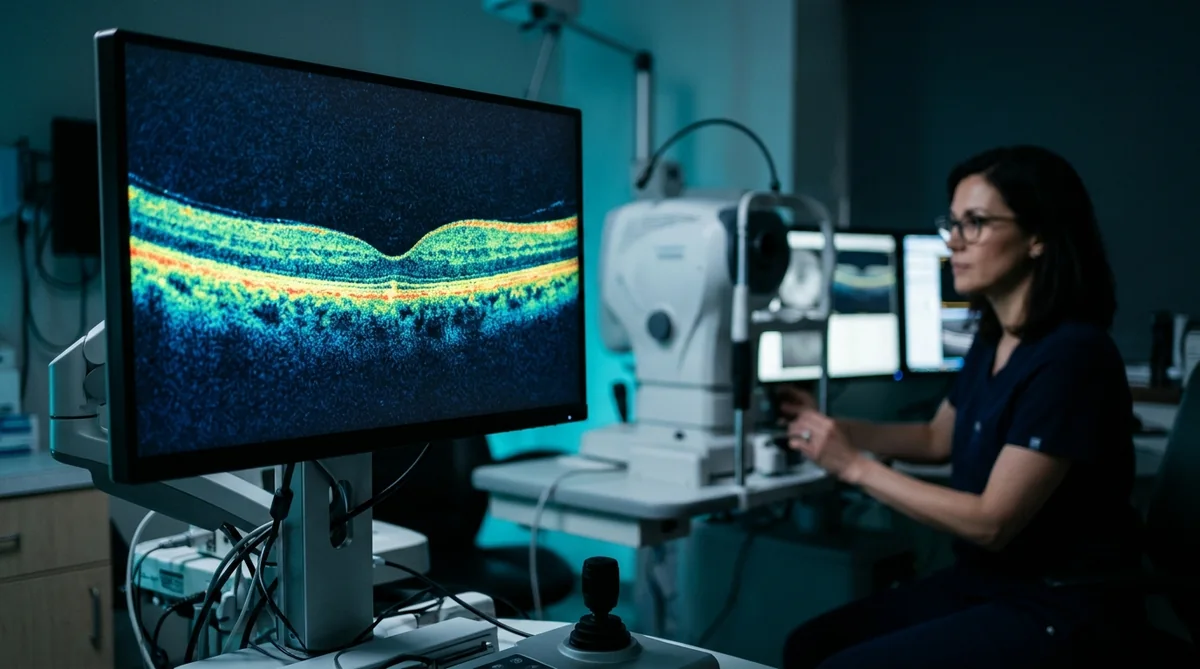
| Optic Nerve & Ganglion Cell OCT | Micron thickness of retinal nerve fibers (RNFL) | Detects microscopic nerve loss years before visual field blind spots appear |
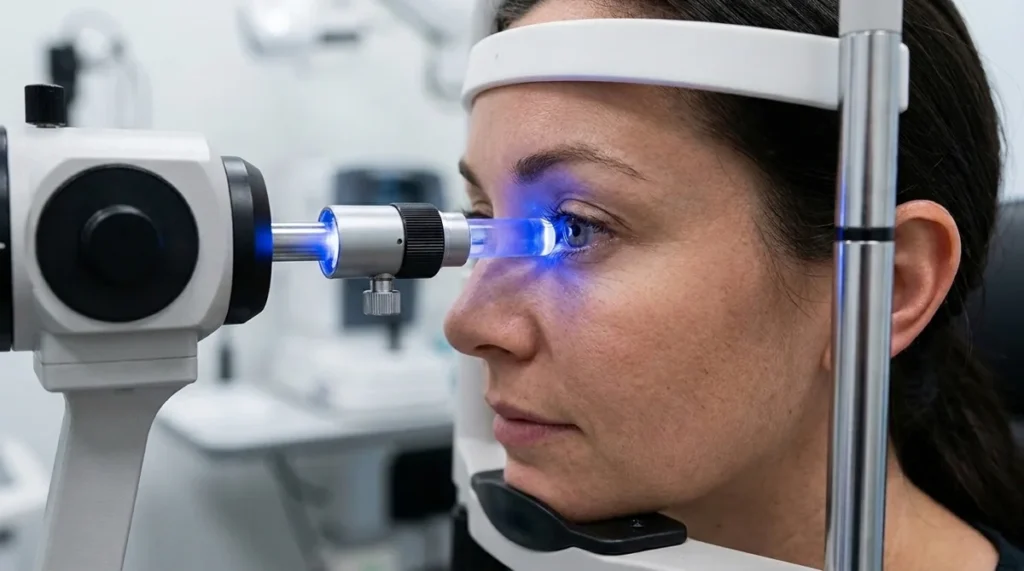
| Gonioscopy & Slit-Lamp Exam | Anterior chamber drainage angle anatomy | Distinguishes open-angle glaucoma from narrow-angle closure risk |
Modern Glaucoma Management & Cataract Surgery Considerations
First-line management focuses on lowering intraocular pressure to a safe personalised target using once-daily prostaglandin or combination eye drops, laser trabeculoplasty, or laser iridotomy for narrow angles. Furthermore, for patients over 55 who have both elevated eye pressure and lens clouding, performing stitchless Cataract Surgery in Turkey replaces the thick aging crystalline lens with an ultra-thin intraocular lens - naturally deepening the anterior chamber angle and significantly reducing intraocular pressure.
Frequently Asked Questions
Medical Review & Clinical Verification | Op. Dr. Selim Güldiken
This medical educational article has been reviewed and approved by Op. Dr. Selim Güldiken, board-certified Ophthalmologist and Eye Surgeon in Turkey (Residency at Akdeniz University Faculty of Medicine; Member of ESCRS, ASCRS, and the Turkish Ophthalmological Association).