

Secondary Cataract (PCO) Explained: Symptoms & YAG Laser Capsulotomy in Turkey
If you had Cataract Surgery in Turkey or Lens Replacement Surgery in Turkey months or years ago and recently noticed your vision becoming slightly misty, hazy, or sensitive to night glare again, you may worry that your cataract has returned. In reality, a cataract can never grow back once your natural lens has been replaced with an artificial intraocular lens (IOL). What you are experiencing is a common physiological process called Posterior Capsule Opacification (PCO), often referred to as a secondary cataract.
Fortunately, Posterior Capsule Opacification does not require another operation. It is permanently resolved in just 2 to 3 minutes inside the consultation room using a painless, incision-free procedure known as Nd:YAG Laser Capsulotomy.
Clinical Summary
A secondary cataract (PCO) is a thin frosting of the natural capsular membrane holding your artificial lens. A single 3-minute outpatient YAG Laser session polishes a clear central window in the capsule, restoring full visual sharpness the very same day.
Why Does Posterior Capsule Opacification (Secondary Cataract) Happen?
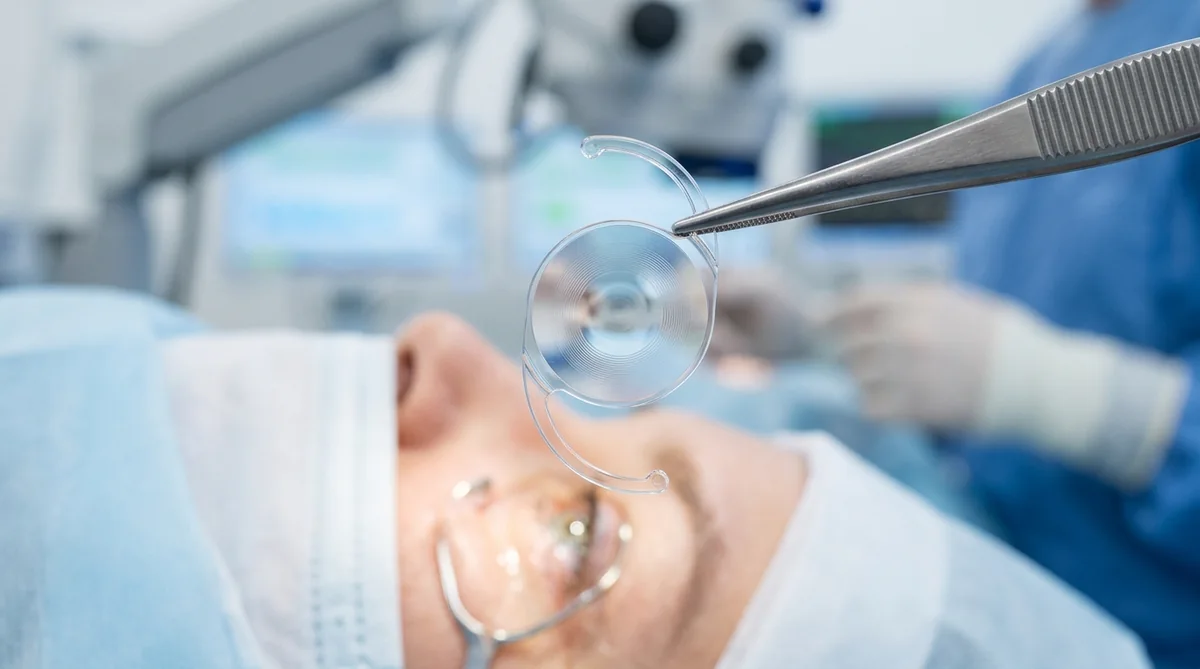
During modern stitchless phacoemulsification surgery, the cloudy natural lens is gently removed while the ultra-thin, transparent membrane that surrounded it (the capsular bag) is left intact to hold the new artificial IOL securely in place. Over the following months or years, microscopic lens epithelial cells remaining on the capsule can naturally migrate across the back surface of the membrane.
When these cells form a frosted layer behind the implant, light passing toward the retina is scattered, mimicking the symptoms of an original cataract. Clinical studies show that PCO occurs in roughly 15% to 30% of patients within 1 to 5 years after lens surgery, and is simply a normal cellular healing response rather than a surgical complication or lens defect.
Common Symptoms of a Secondary Cataract
Signs That Your Posterior Capsule Has Become Frosted:
- Gradual return of misty, foggy, or frosted-glass vision in one or both eyes
- Increased glare, starbursts, or halos around oncoming car headlights at night
- Reduced contrast sensitivity and colours appearing slightly washed out
- Difficulty reading small text on smartphones or books despite having a Trifocal or EDOF Smart Lens
- No improvement in sharpness when testing standard spectacle lenses
How YAG Laser Capsulotomy Works
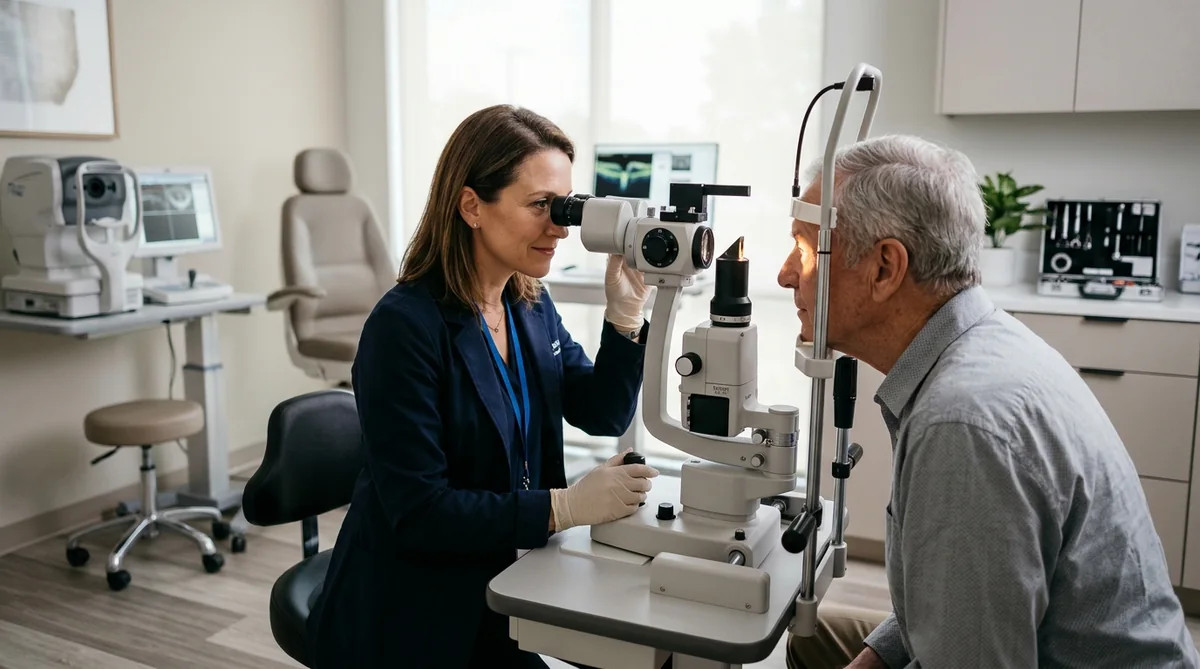
Nd:YAG Laser Capsulotomy is a non-invasive outpatient procedure performed right in the examination chair during an Ophthalmology Consultation in Turkey. There are no incisions, no needles, no stitches, and no operating theatre required.
First, dilating and numbing eye drops are applied 20 minutes before the procedure. Sitting at a specialised slit-lamp microscope, Op. Dr. Selim Güldiken uses gentle, precision-focused nanosecond laser pulses to create a crystal-clear 3 to 4 mm opening in the centre of the frosted posterior capsule without touching or damaging the intraocular lens itself. The entire treatment takes less than 3 minutes per eye.
| Clinical Parameter | Original Cataract / Lens Replacement Surgery | YAG Laser Capsulotomy for PCO |
|---|---|---|
| Setting | Sterile Operating Theatre | Outpatient Examination Room |
| Duration | 10-15 Minutes per Eye | 2-3 Minutes per Eye |
| Incisions | 2.2 mm Self-Sealing Micro-Incision | Zero Incisions (Completely Non-Invasive) |
| Visual Recovery | 24-48 Hours | 3-4 Hours (As soon as pupil dilation wears off) |
| Activity Restrictions | No swimming or eye rubbing for 2 weeks | Zero restrictions; fly or swim the next day |
Recovery After YAG Laser Capsulotomy
Because no incision is made on the surface of the eye, there is zero downtime after YAG Laser Capsulotomy. Your vision will be slightly bright for 3 to 4 hours while the dilating drops wear off, after which clarity returns immediately. Some patients notice a few tiny harmless floaters for a few days as the microscopic capsule fragments dissolve naturally inside the eye.
Permanent One-Time Solution
Once the central posterior capsule is opened with the YAG laser, epithelial cells can never grow across the visual axis again. A single session provides permanent optical clarity for life.
Frequently Asked Questions
Medical Review & Clinical Verification | Op. Dr. Selim Güldiken
This medical educational article has been reviewed and approved by Op. Dr. Selim Güldiken, board-certified Ophthalmologist and Eye Surgeon in Turkey (Residency at Akdeniz University Faculty of Medicine; Member of ESCRS, ASCRS, and the Turkish Ophthalmological Association).