
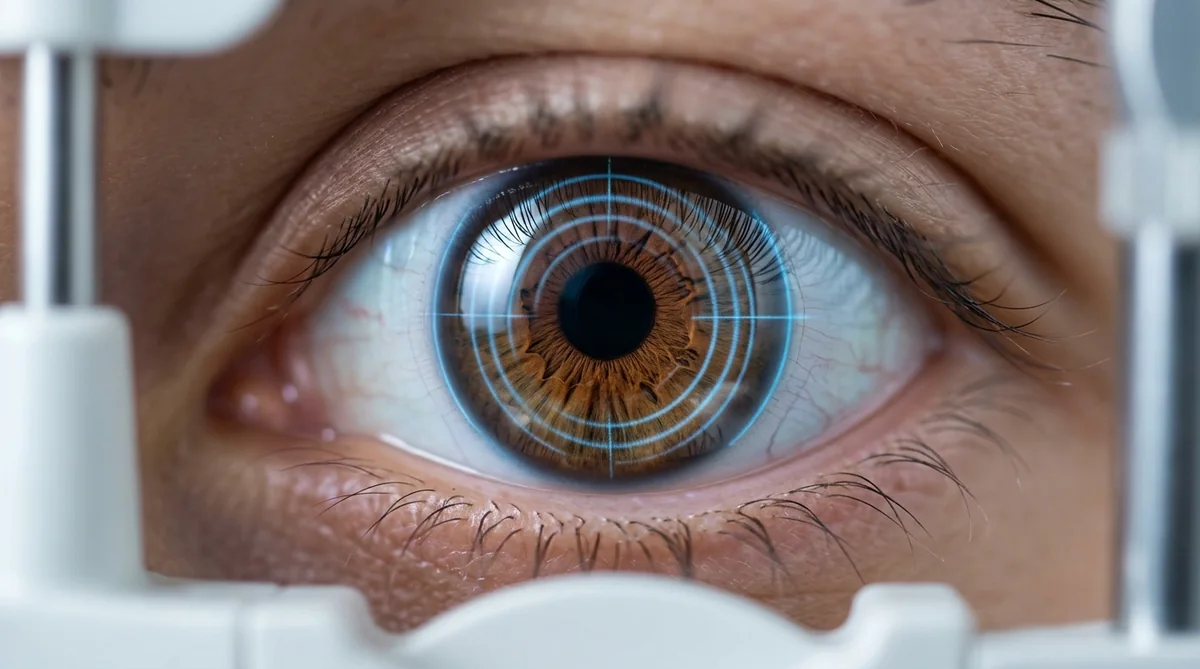
Progressive childhood myopia (nearsightedness) stretches the eyeball axially, raising adult risks of retinal detachment, myopic maculopathy, and glaucoma. At our Antalya clinic, Op. Dr. Selim Guldiken uses optical biometry (axial length tracking), specialized myopia-control lenses (DIMS / H.A.L.T.), and low-dose atropine protocols to slow progression by 50-60%.
Why Ordinary Glasses Do Not Slow Childhood Myopia Progression
Standard single-vision lenses sharpen the classroom board but focus peripheral light slightly behind the retina (hyperopic defocus), signaling a growing eye to keep elongating. International Myopia Institute data proves that keeping a child's final prescription just 1.00 diopter lower slashes lifetime myopic maculopathy risk by 40% and retinal detachment risk by 30%.
3 Scientifically Proven Myopia Control Pillars
- Myopia-Control Spectacle Lenses (DIMS / H.A.L.T.): Hundreds of microscopic peripheral lenslets create a protective myopic defocus signal while keeping central sight 100% crisp, slowing progression 55-67% with zero contact-lens infection risk.
- Low-Dose Atropine (0.01%-0.05%): One gentle bedtime drop slows scleral elongation biologically without disrupting classroom reading; easily combined with defocus glasses in fast progressors.
- Outdoor Daylight & Near-Work Ergonomics: At least 2 hours daily in bright outdoor sunlight boosts retinal dopamine, paired with 35-40 cm reading distance and 20-20-20 breaks.
Red-Flag Warning Signs Requiring Urgent Ophthalmology Evaluation
- Myopia jumping ≥0.75 D in a single year: Upgrade immediately from ordinary glasses to an active myopia-control protocol.
- Early onset under age 8 with myopic parents: High risk of reaching -6.00 D without axial-length monitoring.
Diagnostic & Pre-Treatment Imaging Protocol in Antalya
Separates temporary screen-induced pseudo-myopia from true axial nearsightedness.
Measures exact eyeball length to 0.01 mm, the gold standard for verifying control efficacy.
Evaluates eye teaming and reading ergonomics.
Tracks growth velocity against age-matched normative percentiles.
Childhood Myopia Control Options Compared
| Option | Progression Reduction | Daily Ease | Ideal Age |
|---|---|---|---|
| Standard Single-Vision Glasses | 0% (Corrects only) | Easy | Does not slow eye growth |
| DIMS / H.A.L.T. Control Glasses | 55% - 67% | Worn just like regular glasses | Ages 6-16 (top non-invasive choice) |
| Low-Dose Atropine Drops | 40% - 60% | 1 drop at bedtime | Ages 5-15 / fast progressors |
| Dual-Focus Contact Lenses | 50% - 60% | Requires lens hygiene | Motivated sporty children 10+ |
Patient Journey: 4 Steps from Diagnostics to Recovery
Cycloplegic & Axial Baseline
Confirms true myopia and logs baseline millimeter eye length.
Custom Control Plan
Starts DIMS/H.A.L.T. glasses and/or low-dose atropine plus daylight habits.
6-Month Biometry Check
Verifies axial elongation has slowed onto a safe trajectory.
Protection Through Teens
Maintains low safe prescription through age 16-18.
Frequently Asked Clinical Questions
Will myopia-control glasses eliminate my child's existing prescription?
Is it better to intentionally under-correct my child's glasses?
Does low-dose atropine blur schoolwork?
At what age can a myopic teenager consider laser eye surgery?
How much daily outdoor time truly helps?
Can international families residing in Antalya get English myopia reports?
Book Your Personal Ophthalmology Evaluation in Antalya
Schedule comprehensive diagnostics and personalized treatment planning with Op. Dr. Selim Guldiken at Ozel Era Eye Hospital in Muratpasa, Antalya.
Related Eye Conditions, Treatments & Clinical Tools
Medical Disclaimer: This guide is authored for patient education by Op. Dr. Selim Guldiken and does not replace an in-person ophthalmic examination.