
Blepharitis causes crusty morning lashes, burning, gritty dry eyes, and paradoxical watering due to chronic eyelid margin inflammation and clogged Meibomian oil glands. At our Antalya clinic, we go beyond temporary tears using microscopic Demodex/MGD diagnosis, medical lid hygiene, and FDA-approved IPL (Intense Pulsed Light) laser therapy.
Why Artificial Tears Alone Fail in Chronic Blepharitis
Your tear film relies on a microscopic lipid shield secreted by Meibomian glands inside the eyelids. In posterior blepharitis (MGD), thickened oil blocks those glands so tears evaporate in seconds, causing burning, fluctuating screen clarity, and reflex watery eyes. In anterior blepharitis, bacterial biofilm or microscopic Demodex mites colonize lash roots, causing stubborn itching and flaking. Simply adding watery drops washes away in minutes without fixing the clogged oil layer.
How IPL (Intense Pulsed Light) Laser Restores Natural Tear Quality
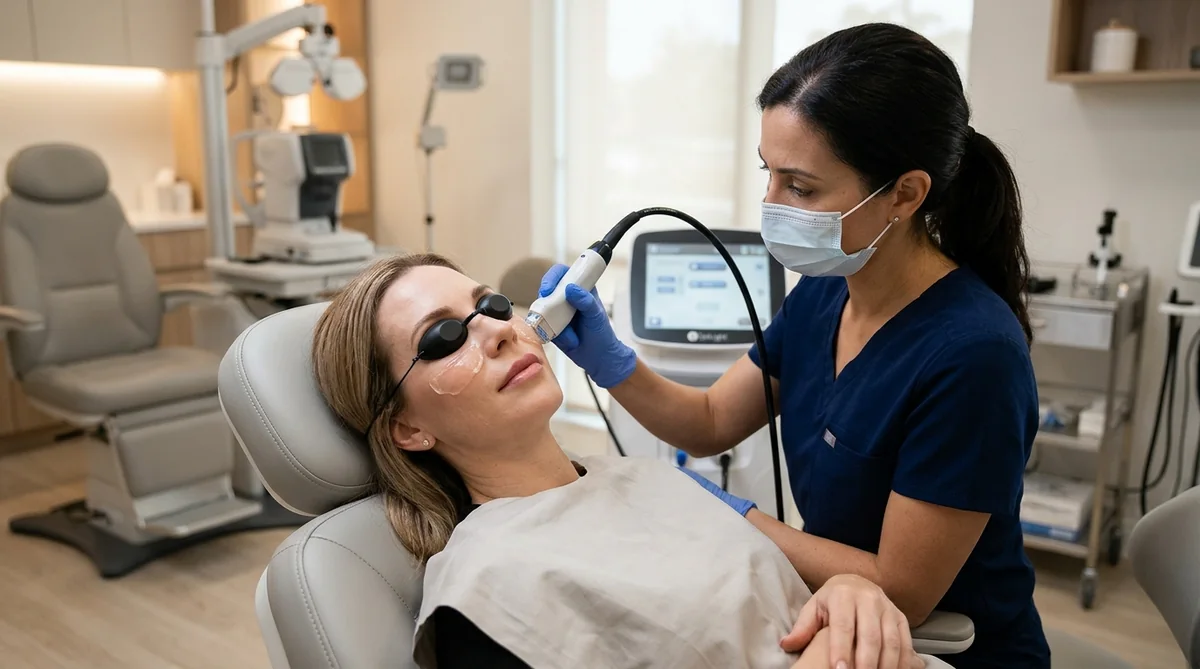
Applied gently below the lower eyelids while protective metal eye shields cover your eyes, IPL laser delivers calibrated light pulses that close abnormal inflammatory vessels (ideal for ocular rosacea), gently melt hardened Meibomian oils back to a healthy liquid flow, and reduce Demodex load. A typical series of 3-4 painless 10-minute sessions delivers lasting dry-eye and blepharitis relief, and optimizes ocular surfaces ahead of laser or Smart Lens surgery.
Red-Flag Warning Signs Requiring Urgent Ophthalmology Evaluation
- Unilateral stubborn lid redness with lash loss or margin ulceration: Must rule out masquerading eyelid malignancy.
- Blurry vision, severe light sensitivity, or white spot on cornea: Signals secondary marginal keratitis requiring prompt ophthalmic care.
Diagnostic & Pre-Treatment Imaging Protocol in Antalya
Identifies cylindrical Demodex collarettes, lid-margin telangiectasia, and oil gland capping.
Measures tear-film stability in seconds to confirm evaporative dry eye.
Maps microscopic corneal dryness and allergic overlap.
Replaces harsh baby shampoo with pH-balanced medical foam, preservative-free lipid tears, and IPL.
Targeted Blepharitis Protocols by Subtype
| Subtype | Hallmark Sign | Home Protocol | In-Clinic Upgrade |
|---|---|---|---|
| Anterior Seborrheic/Bacterial | Oily lash flakes & red margins | Medical lid foam + short antibiotic ointment | Micro-exfoliation cleaning |
| Demodex Blepharitis | Cylindrical sleeves at lash base | Tea-tree oil (TTO) clinical wipes | IPL Laser + targeted hygiene |
| Posterior (MGD / Rosacea) | Screen burning, frequent styes | Warm mask + preservative-free lipid tears | 3-4 IPL Laser sessions + gland expression |
Patient Journey: 4 Steps from Diagnostics to Recovery
Tear & Gland Mapping
Slit-lamp and TBUT exam classify your exact blepharitis subtype.
Calm Inflammation
Medical lid hygiene and preservative-free lubricants begin immediately.
IPL Laser Series
10-minute painless IPL sessions restore fluid Meibomian oil output.
Effortless Maintenance
A 60-second daily lid routine keeps eyes comfortable and clear.
Frequently Asked Clinical Questions
Should I still wash my eyelids with baby shampoo?
Is blepharitis contagious?
Is IPL safe around the eyes?
Can I have Smart Lens or LASIK if I have blepharitis?
Why do my eyes water if I have dry eye from blepharitis?
When will I feel relief from IPL?
Book Your Personal Ophthalmology Evaluation in Antalya
Schedule comprehensive diagnostics and personalized treatment planning with Op. Dr. Selim Guldiken at Ozel Era Eye Hospital in Muratpasa, Antalya.
Related Eye Conditions, Treatments & Clinical Tools
Medical Disclaimer: This guide is authored for patient education by Op. Dr. Selim Guldiken and does not replace an in-person ophthalmic examination.