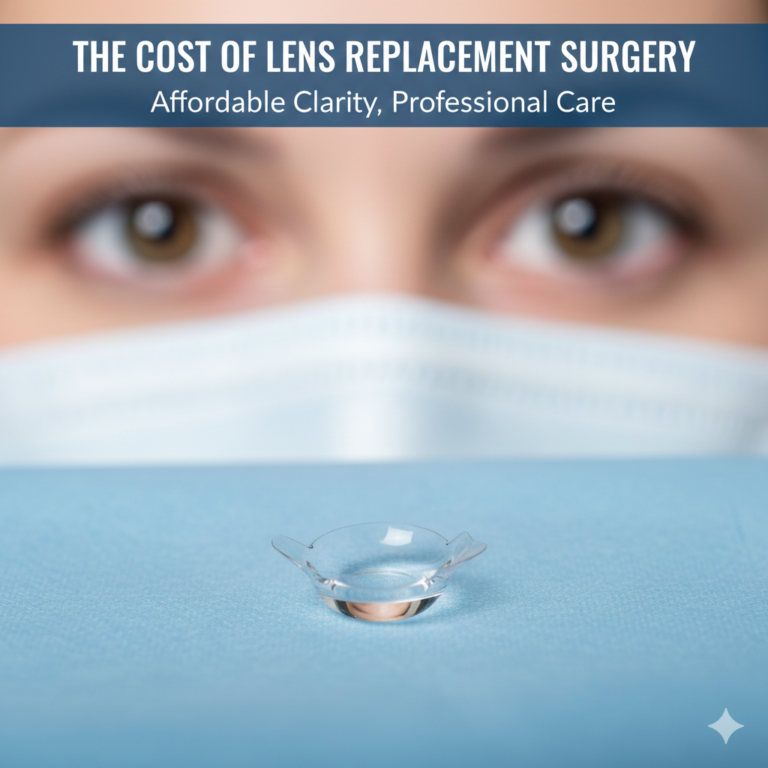

Which procedure is right for you? RLE vs LASIK? The answer depends entirely on your age, current vision status, and long-term vision goals.
For years, LASIK has been the gold standard for vision correction. It has successfully helped millions of people, typically those in their 20s and 30s, eliminate the need for glasses.
However, once you hit your mid-40s, a new hurdle appears: presbyopia, or the age-related loss of near vision. This changes the game entirely. For patients over 45 who rely on reading glasses, the choice is often not between LASIK and nothing, but between LASIK and a more permanent solution: Refractive Lens Exchange (RLE), also known as Clear Lens Exchange (CLE).
The Problem After 40s: Presbyopia (The Need for Reading Glasses)
As we age, the eye’s natural lens stiffens and loses its ability to change shape and focus on near objects. This is presbyopia, and it affects everyone.
- LASIK reshapes the cornea (the front surface of the eye) but does not fix the stiffening lens.
- RLE replaces the natural, aging lens with a new, artificial lens (IOL) that can often correct vision at all distances (near, intermediate, and far) simultaneously.
Option 1: LASIK (Laser-Assisted In Situ Keratomileusis)
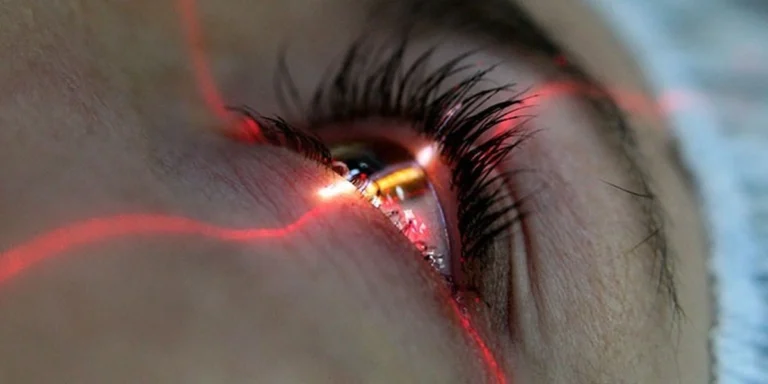
LASIK is ideal for correcting nearsightedness, farsightedness, and astigmatism by reshaping the cornea.
| Pros for Patients Over 45 | Cons for Patients Over 45 |
| Quick Recovery: Fastest return to work and daily activities. | Temporary Solution: Does not prevent or treat presbyopia. Reading glasses will still be necessary, or soon will be. |
| Lower Cost: Generally less expensive than RLE, making it attractive for budget-conscious patients. | Future Cataract: The natural lens remains, meaning the patient will eventually need cataract surgery later in life. |
| No Internal Change: Less invasive, only affecting the outer layer of the eye. | Limited Range of Focus: Only corrects existing refractive error, not the need for near vision. |
When to Choose LASIK After 45
LASIK is best for a patient over 45 who:
- Does not mind reading glasses and just wants to correct their distance vision.
- Has minimal existing presbyopia and is seeking the lowest up-front cost.
Option 2: RLE (Refractive Lens Exchange / Clear Lens Exchange)
RLE is essentially the same procedure as modern cataract surgery, but the lens is replaced before a cataract fully develops. This procedure is a permanent solution because it addresses the root cause of age-related vision loss.
| Pros for Patients Over 45 | Cons for Patients Over 45 |
| Cataract Prevention: Since the natural lens is removed, you will never develop a cataract. | Higher Upfront Cost: Considered a premium elective procedure, often not covered by US insurance plans (Medicare/private). |
| Total Vision Correction: With Trifocal or Multifocal IOLs (Smart Lenses), you can achieve excellent vision at near, intermediate, and distance without glasses. | Slightly Longer Recovery: The initial recovery is a little longer than LASIK (a few days of adjustment vs. a few hours). |
| Permanent Fix: Corrects existing vision errors and permanently eliminates presbyopia. | Small Risk of Glare/Halos: Some premium IOLs can cause temporary or mild visual disturbances at night. |
When to Choose RLE After 45
RLE is the superior, long-term choice for a patient over 45 who:
- Wants to eliminate glasses completely (near, intermediate, and far).
- Views the procedure as a single investment that also prevents future cataract surgery.
- Prioritizes convenience and premium vision over minimizing cost.
The Technology Edge: Premium IOLs (Smart Lenses)
The success of RLE hinges on the type of Intraocular Lens (IOL) chosen. While traditional RLE used Monofocal IOLs (correcting only one distance), modern options offer:
- Trifocal/Multifocal IOLs: Provide sharp focus across near, intermediate (computer distance), and far.
- Extended Depth of Focus (EDOF) IOLs: Offer a continuous range of high-quality vision, especially useful for patients who spend significant time on screens.
These premium IOLs are what allow Dr. Selim Güldiken to tailor the procedure to your specific lifestyle, maximizing your chances of truly seeing without glasses.
Conclusion: Making the Right Decision | RLE vs LASIK
If you are under 40, LASIK is typically the recommended choice. If you are over 40s, particularly if you are in your 50s or 60s, Refractive Lens Exchange (RLE) is often the better value and the most comprehensive, permanent solution.
Consult with an experienced ophthalmologist to determine which procedure is the optimal single investment for your long-term visual freedom.
Medical Review & Clinical Verification | Op. Dr. Selim Güldiken
This medical educational article has been reviewed and approved by Op. Dr. Selim Güldiken, board-certified Ophthalmologist and Eye Surgeon in Turkey (Residency at Akdeniz University Faculty of Medicine; Member of ESCRS, ASCRS, and the Turkish Ophthalmological Association).